
Parents often assume that orthodontic treatment begins in the teenage years, once all the adult teeth have come through. For many children that is true, but waiting until then can mean missing a valuable window. Some bite and jaw problems are easier to address while a child is still growing, and early assessment helps families understand what lies ahead.
Knowing when to seek advice and what signs to watch for can make treatment simpler, shorter and more effective.
The Recommended Age for a First Check
Many orthodontic organisations recommend that children have their first orthodontic assessment by around age seven. At this stage, most children have a mix of baby and adult teeth, and the first permanent molars have usually come through. This makes it possible to evaluate how the jaws are developing and how the teeth are likely to line up.
An early check does not necessarily mean early treatment. In most cases, the advice is simply to monitor growth and review again later.
Why Earlier Can Be Better
Children’s jaws are still developing, which presents opportunities that disappear once growth is complete. For example, a narrow upper jaw can often be widened with an expander while the bones are still flexible. Certain bite problems, such as crossbites or significant overbites, may be easier to guide during growth than to correct later.
Early intervention can also create space for adult teeth to come through, reducing the need for extractions in some cases.
Signs Parents Can Look For
Some signs suggest that an orthodontic assessment would be worthwhile:
- Early or late loss of baby teeth
- Difficulty chewing or biting
- Mouth breathing or snoring
- Thumb or finger sucking beyond age five
- Crowded, misplaced or blocked-out teeth
- Jaws that shift or make sounds when opening and closing
- Teeth that do not meet properly or at all
- Facial imbalance or a jaw that appears too far forward or back
These signs do not always mean treatment is needed, but they are worth discussing with a professional.
Habits That Affect Development
Prolonged thumb sucking, dummy use and tongue thrusting can influence how teeth and jaws develop. These habits may push front teeth forward or prevent them from meeting properly. Mouth breathing, often linked to enlarged tonsils, adenoids or allergies, can affect facial growth and the position of the teeth.
Addressing these habits early, sometimes with the help of a GP, speech pathologist or ear, nose and throat specialist, can support healthier development.
What Happens at an Assessment
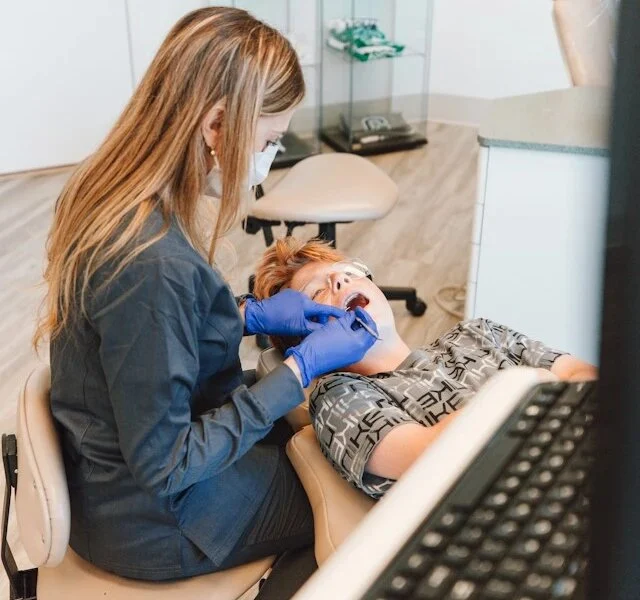
An initial consultation typically involves a discussion of medical and dental history, an examination of the teeth, jaws and face, and photographs or X-rays to assess development. The orthodontist will explain what they see, whether treatment is recommended now or later, and what options might be suitable.
Parents should feel free to ask questions about timing, costs, likely outcomes and what would happen if treatment were delayed.
Two-Phase Treatment
Some children benefit from what is called two-phase treatment. The first phase, often between ages seven and ten, focuses on correcting jaw relationships or creating space. This is followed by a rest period while adult teeth come through. The second phase, usually in the early teens, involves braces or aligners to fine-tune the position of the teeth.
Not every child needs this approach, and many achieve excellent results with a single phase of treatment later on.
Supporting Your Child Through Treatment
Children can feel self-conscious about orthodontic appliances. Positive encouragement, involving them in decisions such as colour choices for brackets and reassuring them that many classmates go through the same thing can help. Emphasising the end result, a healthy, comfortable smile, keeps motivation high.
Good oral hygiene is essential during treatment. Children may need extra help and reminders to brush around brackets and appliances.
Costs and Planning Ahead
Orthodontic treatment is a significant investment. Early assessment helps families plan by giving an idea of whether treatment is likely and roughly when. Many practices offer payment plans, and private health insurance with orthodontic cover can help, though waiting periods often apply, so it is worth reviewing policies well in advance.
The Role of the Family Dentist
Regular check-ups with a general dentist often provide the first clue that a child would benefit from an orthodontic opinion. Because dentists see children every six to twelve months, they can track how teeth are erupting, notice when baby teeth are lost unusually early or late, and spot crowding before it becomes severe. Many referrals for early assessment come from these routine visits.
Keeping up with general dental care also ensures teeth are healthy before any orthodontic treatment begins, since decay or gum inflammation needs to be addressed first.
Setting Up for a Healthy Future
An early orthodontic check is a simple step that provides valuable insight into a child’s development. Whether the outcome is reassurance, monitoring or early treatment, parents gain the information they need to make informed decisions. Catching issues early can mean simpler treatment and a more confident smile for years to come.
