
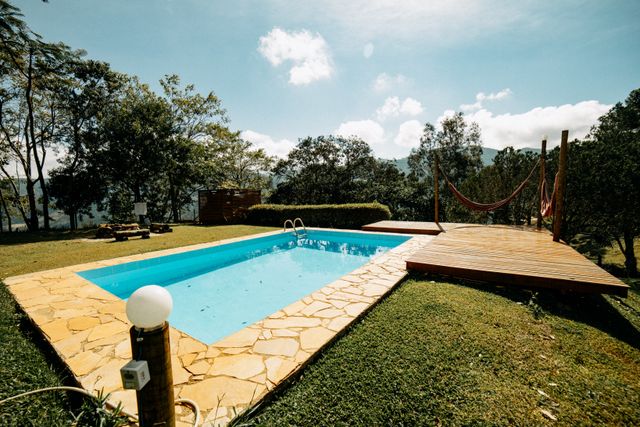
When people picture a pool project going wrong, they usually imagine a leak, a cracked liner, or a pump that fails too soon. Far more common , and far less visible until the bills start arriving or the water never quite feels right , is equipment that simply isn’t sized correctly for the pool it’s serving. Whether it’s a pump, a filter, or electric pool heaters matched to the wrong volume of water, undersized or oversized equipment quietly undermines a pool’s performance in ways many owners don’t recognize until years of frustration have passed.
Undersized Equipment Works Too Hard, All the Time
When equipment is too small for the pool it’s serving, it doesn’t fail outright , it just struggles constantly. An undersized pump can’t circulate water efficiently enough to keep it properly filtered and chemically balanced, which shows up as cloudy water, algae growth, or a constant chemical demand that never seems to stabilize. An undersized heater runs continuously trying to reach a target temperature it can’t efficiently maintain, especially as outdoor temperatures drop in the evening or in shoulder seasons.
The frustrating part is that this kind of underperformance often gets misdiagnosed. Owners assume they have a chemistry problem, or a heater that’s simply broken, when the real issue is that the equipment was never matched to the pool’s actual size and needs in the first place.
Oversized Equipment Wastes Money in a Different Way
The opposite mistake , installing equipment that’s larger than necessary , creates its own problems. Oversized pumps can move water through a system too quickly, reducing filtration effectiveness and sometimes causing unnecessary wear on other components. Oversized heaters cost more upfront and often more to run, cycling on and off more frequently than a properly sized unit would, which isn’t necessarily more efficient just because the unit is more powerful.
In both cases, the extra capacity doesn’t translate into better performance , it just translates into higher costs, either at purchase or over years of operation, without a matching benefit in how the pool actually performs.
Sizing Calculations Aren’t Guesswork
Properly sizing pool equipment isn’t a matter of rough estimation , it follows fairly specific calculations based on pool volume, surface area, and in the case of heaters, factors like desired temperature rise and how quickly that temperature needs to be reached. Manufacturers publish sizing guidance precisely because getting this number right has such a direct impact on how well their equipment performs once installed.
Skipping this step, or relying on a rough guess based on a neighbor’s similar-looking pool, is one of the most common reasons pool owners end up disappointed with equipment that, on paper, should have been perfectly capable of doing the job.
Correct Sizing Extends Equipment Lifespan
Equipment that’s properly matched to a pool’s demands runs under conditions it was actually designed for. Pumps operate at efficient flow rates rather than being pushed beyond their design limits or left running below an effective threshold. Heaters cycle in a pattern that matches their design specifications rather than running constantly or overshooting frequently.
This matters for longevity as much as day-to-day performance. Equipment that’s consistently overworked or mismatched to its load tends to wear out faster, require more frequent repairs, and need earlier replacement than equipment operating within its intended range. Getting the sizing right at installation is one of the simplest ways to protect that investment over the equipment’s full expected lifespan.
The Whole System Needs to Work Together
Pool performance isn’t determined by any single piece of equipment in isolation , pump, filter, and heater all need to work together as a coordinated system. A heater sized perfectly for the pool’s volume still won’t perform well if the pump circulating that water is undersized, since the heater depends on adequate flow to distribute heated water evenly. Sizing decisions made independently, without considering how each component interacts with the others, can lead to a system where individual pieces are technically correct on paper but underperform together in practice.
This is why sizing is best approached as a whole-system question rather than a series of separate decisions made piece by piece.
Getting Guidance Pays for Itself
Because sizing calculations depend on several variables specific to each pool, getting knowledgeable guidance before purchasing equipment tends to prevent far more expensive problems than it costs. A brief conversation with someone who understands how to match equipment to a pool’s actual specifications can prevent months of frustration with underperforming equipment, or the added expense of replacing an incorrectly sized unit after the fact.
The Bottom Line
Pool performance problems that seem like chemistry issues, mechanical failures, or simple bad luck are very often, at their root, a sizing problem , equipment that was never properly matched to the pool it’s serving. Taking the time to calculate the right specifications before purchasing, and considering how pumps, filters, and heaters work together as a system, leads to a pool that performs consistently, costs less to run, and lasts longer than one built around equipment chosen by guesswork alone.
