
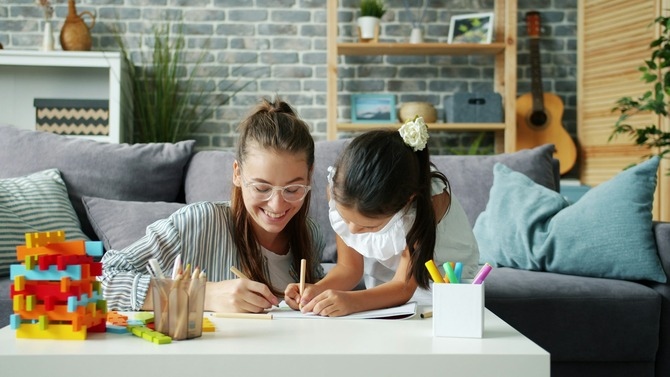
Every mother wants her child to succeed in school and become a confident learner. But many children have difficulty with focus, motivation and consistency when it comes to studying. In today’s digital world, there are distractions everywhere and many parents feel overwhelmed trying to create healthy learning routines at home.
The good news is, you don’t need expensive tutoring programs and rigid schedules to build strong learning habits. Small everyday activities, emotional support, fun educational activities can make a big difference to how children feel about learning.
In this article we will explore some practical ways that moms can help their children develop better learning habits at home, while keeping the experience positive, balanced and fun.
Make a Quiet and Comfortable Place to Learn
Children learn better when they have a special place to study and be creative.” A learning space doesn’t have to be large and luxurious. A quiet little table in a corner can help children get in the mood to learn.
The learning space should be clean and organized, free from unnecessary distractions. Keep supplies like pencils, books, paper, colors, etc. handy so that the child does not lose track of time in finding the materials.
The natural light and comfortable seats also help you focus. Research from Harvard University shows that physical environments can affect learning and cognitive performance.
Resource: Harvard Health Publishing
Children who do educational activities over and over in the same area develop a brain association of that space with focus and productivity.
Create a Basic Daily Routine
Kids do best when they know what to expect. Having a simple, realistic daily routine helps reduce stress and increase consistency.
Moms can introduce short learning sessions throughout the day instead of long hours of study. Even 20 to 30 minutes of focused learning can be very effective for younger kids.
A balanced routine might include:
- Time for homework
- Time to read
- Creative activities
- Outdoor play
- Family chat
- Breaks for relaxation
Perfection is overrated. Consistency is not. Children with routine tend to have better time management skills and are more independent learners.
The American Academy of Pediatrics also recommends balanced schedules with plenty of sleep, physical activity, and less screen time.
Resource: American Academy of Pediatrics
Promote Reading Every Day
Reading is one of the best ways to develop language skills, imagination, vocabulary and performance in studies.
Moms can encourage reading by incorporating books into daily life. Sharing books before bedtime, talking about stories at mealtimes or visiting online story sites can help to build up children’s natural interest in reading.
Parents should allow children to choose books that interest them. Some children prefer stories of adventure, others funny stories, animal stories, or stories about learning.
Interactive short stories are also used to improve children’s reading comprehension and to make learning fun. Parents looking for fun reading material for kids can check out educational short stories for kids on Kids World Fun.
Reading needs to be educational, but not forced. Children who love reading are more likely to become lifelong learners.
Use Educational Entertainment Carefully
While many moms worry about screen time, not all digital content is bad. Educational videos, songs and interactive activities can help learning, in moderation.
Instead of letting their children watch random videos for hours, parents can offer educational entertainment, where learning and fun go hand in hand.
Animated educational videos can assist children in understanding concepts while developing listening and language skills. Carefully chosen educational content can foster creativity and curiosity.
Parents can also look for animated movies for kids that combine fun and learning activities.
It’s all about balance. Educational screen time does not substitute for physical activity, interaction with family, or outdoor play.
The U.S. Centers for Disease Control and Prevention (CDC) encourages parents to promote healthy media use and balance the time spent on screens with other non-screen activities.
Source: Centers for Disease Control and Prevention (CDC)
Focus on Encouragement, Not Pressure
Many children drop out of learning because they feel under constant pressure to perform perfectly. Anxiety can be created by fear of mistakes and can ruin confidence.
Focusing on effort rather than on results only is a way for mothers to teach children to have a more productive attitude toward learning.
Simple encouragement like:
- “You put a lot of work into this.”
- “Good job on bettering yourself.”
- “Mistakes teach us.”
can do wonders for a child’s confidence.
Children who feel emotionally supported are more likely to be willing to try new things, ask questions, and stay motivated.
Positive reinforcement also helps reinforce the emotional bond between parents and children, which plays an important role in long-term academic success.
Teach Children to Learn by Play
Learning doesn’t always have to be traditional studying. Playing can foster creativity, problem-solving skills, and communication skills.
Simple puzzles, story-telling games, drawing, role-play, cooking and building activities are all great ways to teach important life skills.
Younger children often focus and remember better with educational games than they do with repetitive worksheets.
You can also involve kids in everyday activities such as grocery shopping, gardening, or setting up household items. These activities teach practical math, language and critical thinking skills naturally.
The National Association for the Education of Young Children, for example, has studies that examine the importance of play in early childhood development.
Resource: National Association for the Education of Young Children
Be a Learning Role Model
Children watch their parents more than many adults realize. Children often copy the curious mother who reads books, learns new things, or continues to do positive things.
Sometimes small actions can have a big impact:
- Reading a book on a regular basis
- Writing notes or journaling
- Puzzle solving
- Talking about interesting subjects
- Time management
It is more likely that children who think of learning as something normal and fun in life will want to develop healthy habits on their own.
No one expects parents to have all the answers. Teaching with children sometimes can help develop stronger family bonds and spark curiosity.
Help Kids Deal with Stress and Feelings
Academic pressure, social challenges and busy schedules can overwhelm children. Emotional well-being is closely associated with learning performance.
Moms can help kids cope with stress by keeping the lines of communication open and listening without judgment.
Children should feel comfortable talking about:
- Concerns about school
- Trouble in Friendship
- Fear of failing
- Difficulty understanding lessons
Methods of relaxation, like deep breathing, walking outside, doing arts and crafts, and talking with family members can help to ease stress.
Sleep is important for concentration and memory also. According to the National Sleep Foundation, kids who get a good night’s sleep tend to achieve more in school.
Resource: National Sleep Foundation
Celebrate The Little Wins
Kids get motivated when their efforts are recognized and appreciated. Celebrating small wins can foster confidence and promote consistency.
A reward can be anything, not necessarily money or a gift. Many Kids Love:
- Verbal praise
- More family time
- Choosing a weekend activity
- Showing their work
- Making a progress chart
Praising effort helps children associate learning with good feelings rather than pressure.
Don’t compare children to brothers, sisters or schoolmates. Each child learns differently and develops skills at their own pace.
Summary and Conclusion
It’s not about perfect schedules or demanding constant academic success that helps children develop better learning habits at home. The best learning spaces are built on encouragement, consistency, curiosity and emotional support.
Mothers have a strong influence on children’s perception of education and self-development. Parents can support children to develop as more confident and independent learners by setting up balanced routines, promoting reading, making effective use of educational resources and supporting emotional health.
The little things every day can make the biggest difference over time. Learning is a positive part of everyday family life when children are more likely to develop habits that help them to succeed both in and out of the classroom.
